
The Scott County Multi-Day Blotter
Scott County publishes no official arrest blotter. No 72-hour, weekly, or rolling log exists. The sheriff page on the county site is only a contact page. It says nothing about archive depth or posting lag. It also says nothing about photograph policy, weekend handling, or how quickly entries roll off. No third-party directory can fill that gap.
A date-bounded request works best. Ask the Scott County Jail or the sheriff whether a daily booking sheet, a release and transfer log, or an incident-report index covers your dates. The jail answers at (479) 637-4155, and the sheriff line is (479) 637-4156. Confirm the custodian and mailing address before mailing anything, because secondary jail addresses conflict.
Read Scott County Arrest Records
Work backward from a known date and agency. A request framed around several days has a better chance of matching a record the office actually maintains. Broad demands for every arrest rarely do. Scott County custodians respond better to narrow, dated questions than to open-ended ones.
- Write the first and last date, including the year.
- Name the person if known and list Scott County Jail, Waldron Police, Mansfield Police, or another arresting agency.
- Ask for the daily booking sheet, arrest-log extract, release or transfer log, and report index for that span.
- Request the arrest report and booking photograph separately if those are needed and maintained.
- Use Arkansas Judiciary case information to follow the filed case.
For same-day intake, the Arrests Last 24 Hours page lays out the live confirmation sequence. New events travel slowly. A court search may not reflect a fresh booking yet, while an older docket can outlast the jail's operational log. Each record has its own shelf life.
Scott County Log Entry Fields
Scott County publishes no sample booking log. That makes it hard to know which fields exist. Treat the field list as a request checklist, not proof that each item is publicly displayed. Ask the custodian directly.
| Requested field | How to read it |
|---|---|
| Name and booking number | Identity and jail intake reference. |
| Arrest and booking times | Separate the street event from jail acceptance. |
| Arresting agency | Identifies the likely report custodian. |
| Charge as booked | Intake charge, subject to court change. |
| Bond or hold | Release condition or other custody basis. |
| Release or transfer entry | Explains why a person is no longer at the jail. |
| Case or warrant number | Links the entry to a court record when present. |
Booking, arrest, and court records answer different questions. A booking entry proves intake happened at the jail. An arrest report gives the officer's account. The court docket tracks the judicial path.
Weekend Scott County Booking Requests
There is no Scott County Monday-posting rule. Don't assume a Friday booking shows up anywhere by Monday. Holidays can slow office access and records processing even while jail operations continue.
For a weekend range, state exact start and end times, and ask whether the log runs on arrest time, booking time, or calendar-day batches. Extend the range through Monday if a transfer or release may have followed the weekend. VINELink helps with current custody. It is no historical blotter.
Scott County News Is Selective
Local Scott County coverage runs weekly and reacts to events. The Waldron News category collects the paper's broad news section. KHBS/40/29 and KTLO publish when something feels newsworthy. A story may credit the jail or sheriff for a fact or photo. No outlet lists every person booked.
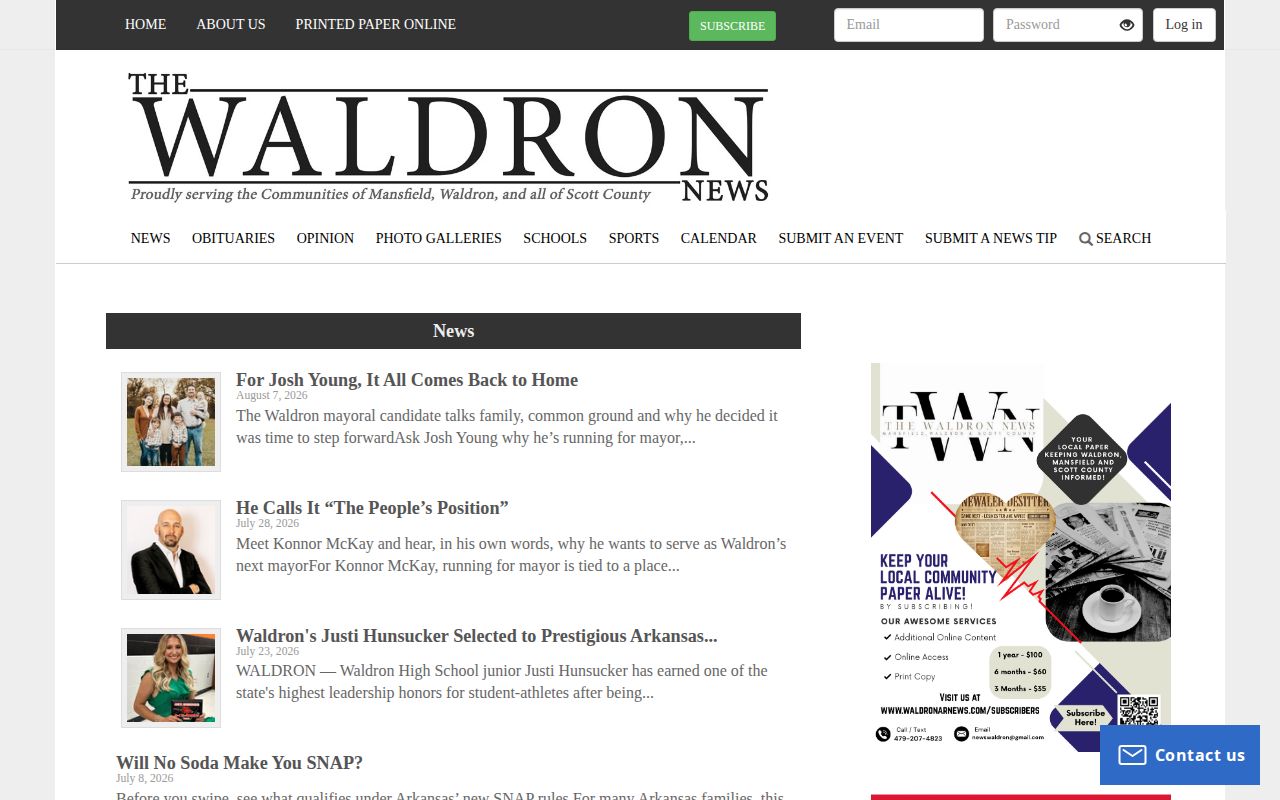
The weekly editorial archive suits selected reports. It is not a Scott County arrest roster. A KHBS Scott County report shows how regional coverage works: a story appears when an event drives it. Coverage follows news value, not booking volume.
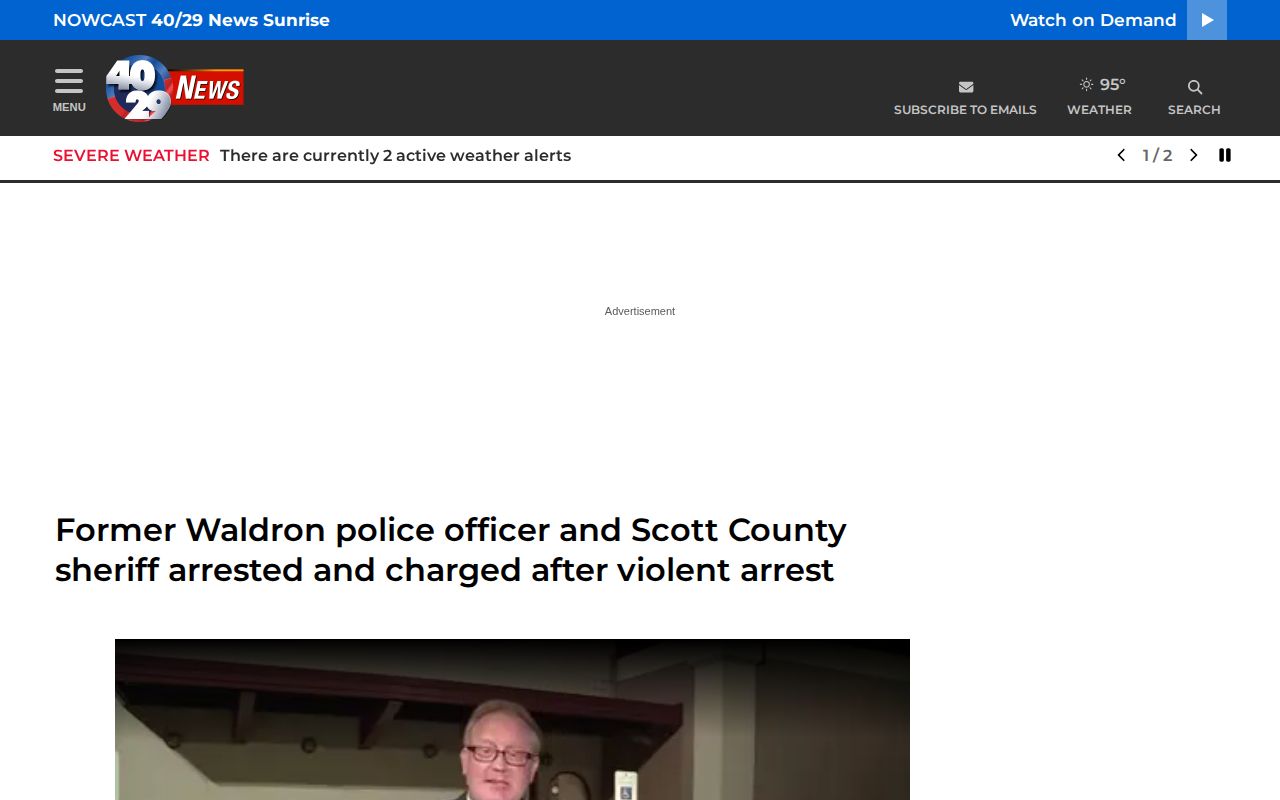
An article can still help. It may name an event, a date, and a source inside the justice system. Its presence or absence proves nothing about the full set of bookings. Silence is not a roster.
Older Scott County Arrest Archives
Scott County posts no retention schedule for booking records or photos. Arkansas's general state schedule excludes county and city government, so it cannot be applied to the sheriff. Ask for the record-series name, the years covered, the retention schedule, and the destruction or transfer authority.
District-court rules add context. Legislative material for A.C.A. § 16-10-211 sets permanent retention for case indices, dockets, active warrants, and sealed-record materials. Complete district-court case files and certain arrest reports carry at least a seven-year period. Those are court rules only.
Older court matters go to the Scott County Circuit Clerk. For historical county material, the Arkansas State Archives research service accepts requests describing record type, dates, place, and subject. It holds no modern Scott County booking-photo collection.
The State Archives research page shows the inquiry route.
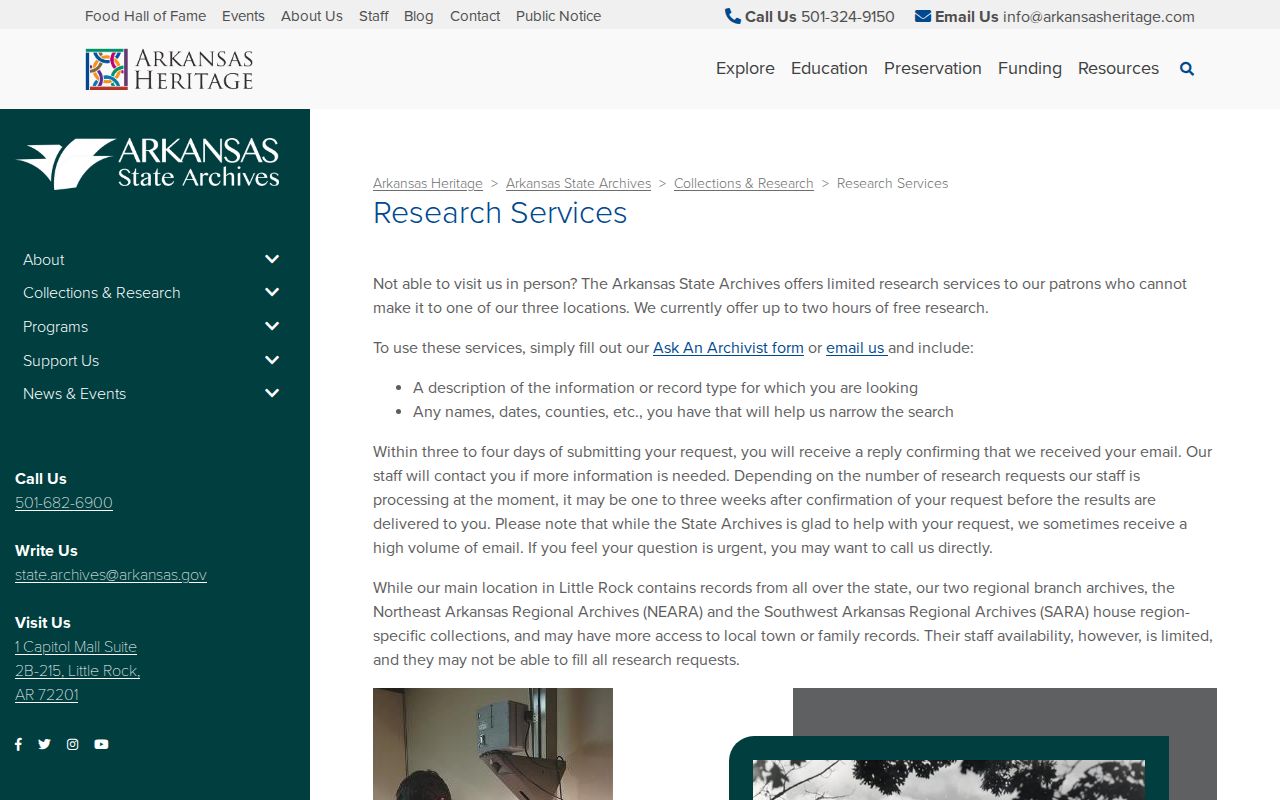
The archive is a lead, nothing more. It will not confirm current custody. It also cannot promise booking photos. Use it for history, then return to the jail for present-day questions.
Unofficial Scott County Arrest Guides
Third-party guides come after the sheriff, jail, courts, and archives. ArkansasArrests.org, JailExchange, and ArrestLedger each carry Scott County pages. None is an official live blotter. Their generalized claims may be stale. No Scott-specific section exists on RecentlyBooked, Arrests.org, Mugshots.com, or Mugshots.zone. Confirm every claim with the government custodian first.
Build a Scott County Archive Request
A strong request names the time span and record series. Include the full name, spelling variants, the arresting agency, and the incident location, and state whether the range follows arrest time or booking time. Those can differ late at night. Ask for an electronic copy and a cost estimate first.
Keep unrelated demands separate. Booking sheets, arrest reports, photographs, release entries, and warrants may sit with different custodians. Ask the sheriff or jail to name each one. If part is withheld, request the legal basis plus a segregable copy, meaning the releasable portion with protected material removed.
Juvenile and undisclosed investigative records can be restricted. A missing entry can also reflect a county line, since Mansfield spans Scott and Sebastian counties and an event may belong in the other county's system.
- Record series
- An office category such as booking sheets.
- Retention
- The rule controlling how long it is kept.
- Segregable copy
- A record released after protected parts are removed.
- Archive depth
- The oldest date actually available.
Keep the response. It can show whether a Scott County blotter exists, which dates survive, and what fee applies. Hold onto it. The reply also tells you which office holds the next arrest record you may need.
Search Weekly Scott County News
Newspapers run on their own clock. The Waldron News is a weekly, not a daily booking feed. So search the incident date first, then look ahead to the next publication cycle. Regional stations sometimes move faster. That speed is an editorial choice, though, not a schedule you can count on. Whenever a story surfaces, cross-check the name and date against the booking record or the docket. A quiet archive proves nothing. Arrests happen without a single line of print. Choose neutral search terms. Combine the person's full name with the agency, the town, and the month or year. Read the attribution on every story too. A photograph credited to the jail or sheriff tells you the reported source, nothing more. Treat it as one clip, not a standing gallery. If the reporting clashes with the docket, the court record wins. The Arkansas Press Association lists two Scott County weeklies: the Waldron News and Mansfield's The Citizen. Neither paper maintains a dedicated arrest archive. Their real value is local context and the events an editor picks. Comprehensive booking coverage comes from elsewhere.
Separate Scott County Record Dates
A multi-day search in Scott County touches several dates. The incident date, arrest time, and booking time come first. Then come the filing date, the first court appearance, and the release date. The publication date comes last. Give each one its own column before comparing anything. That habit stops a Monday news story about a Friday arrest. It keeps the two from looking like separate events. Ask which date a jail extract sorts by, booking or arrest. If your span crosses midnight, widen it so both sides land inside. A release log may start only after the last arrest date. Note its opening day. Weekend searches deserve extra room. Stretching the range through the next business day can capture a recorded transfer. This works without assuming the county posts slowly. Once a court case number appears, store it beside the booking number. Those two identifiers link records far better than a name alone. Names repeat; numbers rarely do. They also help the clerk pull a criminal docket. This avoids an unrelated civil matter or an older case.
Public Record Search
Sponsored Results